
Considered, Not Decorated: A 5-Step Styling Process for Indian Homes
A five-step styling process, drawn from the world's leading designers and adapted for Indian homes. Follow it room by room in a single weekend.
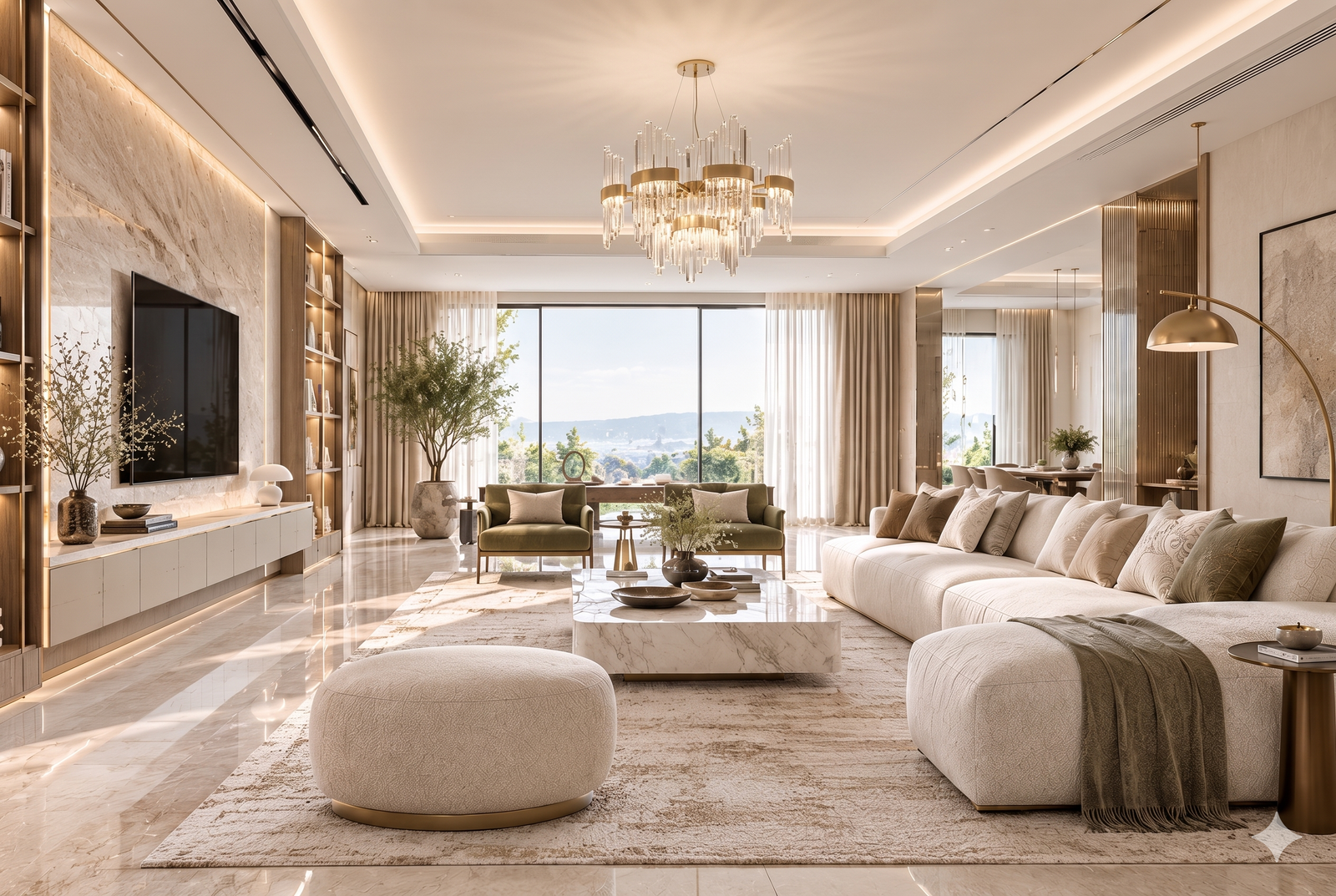
Most Indian homes are not short of beautiful things. They are short of room for them to breathe.
A brass lamp from a grandmother. Wedding gifts still in their boxes. A sofa chosen in a hurry, a showcase full of souvenirs, a TV wall that took over the living room. Each piece means something, yet together the room feels busy rather than calm.
This is the difference between a decorated room and a considered one. A decorated room adds. A considered room chooses. Every piece earns its place, the eye knows where to rest, and the space works for the way your family actually lives: guests on a Sunday, the morning aarti, children doing homework at the dining table.
The world’s most respected designers return to the same idea in different words. London designer Ilse Crawford builds rooms around how people feel and live in them, not just how they look. Belgian designer Axel Vervoordt finds beauty in natural materials and pieces softened by time. Stylist Emily Henderson starts every room by editing out what you don’t need or love.
At Arth, this is how we approach every space we style. Here is our five-step process, adapted for Indian homes. You can follow it in a single weekend, room by room, without buying anything new until step three.
Step 1: Edit before you add
Styling begins by taking things away. Before you shop, empty the surfaces of one room — the coffee table, console, shelves and showcase — and put everything on the floor or bed.
Now sort it into three groups:
- Keep: pieces you love or use every week.
- Rotate: festive décor, gifts and collections you like but don’t need out all year. Store them and swap them in by season.
- Let go: broken, duplicate or forgotten things. Donate or pass them on.
Only the Keep pile goes back into the room. Be honest about the showcase cabinet in particular: a glass unit packed with crockery and souvenirs is often the single biggest source of visual noise in an Indian living room.
A quick test: stand at the room’s doorway. If your eye jumps around without landing anywhere, keep editing.
Step 2: Set a palette and choose honest materials
A calm room has a clear, limited palette. Designers often use the 60-30-10 rule as a starting point: about 60% of the room in a main colour, 30% in a secondary tone, and 10% in an accent.
| Share | Where it shows up | Example |
|---|---|---|
| 60% main | Walls, floor, large sofa | Makrana marble, lime plaster, oatmeal linen |
| 30% secondary | Wood, curtains, a second chair | Sheesham, teak, terracotta |
| 10% accent | Cushions, art, brass, plants | Indigo, ochre, olive, brass |
Work with what you can’t change. Most Indian apartments come with marble or vitrified floors in cool greys and off-whites, so build your palette from the floor up. Warm the room with wood and textiles rather than fighting the floor.
Then choose honest materials: solid wood, stone, linen, cotton, wool, cane and clay. They age gracefully in Indian heat and dust, and they gain character with use instead of looking tired.
Step 3: Choose one anchor piece and plan the layout
Every considered room has one piece that holds it together. In a living room it is usually the sofa; in a bedroom, the bed; in a dining area, the table. Everything else takes its cue from this anchor in scale, colour and mood.
This is where most buying mistakes happen, so measure first:
- The room: length, width, and where doors, windows, switches and AC units sit.
- The path: leave 75–90 cm (about 2.5–3 ft) for main walkways.
- The coffee table gap: keep 40–45 cm (about 16–18 inches) between sofa and coffee table.
- The way in: standard apartment doors are often only 32–36 inches wide, and lift openings can be tighter still. Measure them before you order.
Place the anchor first, facing the room’s natural focus: a window, an artwork, or the conversation area. Not every sofa needs to face the TV. In a home that hosts often, an L-shape or a sofa with two chairs opposite makes conversation easier than a row of seats all pointing at one wall.
If a standard size doesn’t fit, a made-to-measure piece usually costs less than living with the wrong one for ten years.
Step 4: Layer texture, light and objects
With the anchor in place, build the room in three layers.
Texture. A room of smooth surfaces feels flat. Mix at least three textures: a bouclé or linen sofa, a wool or jute rug, a wooden table, a stone or clay object. This is the heart of Ilse Crawford’s thinking: we experience rooms through touch as much as sight.
Light. Replace the single ceiling tube light with three layers:
- Ambient: soft overall light from ceiling fixtures or cove lighting.
- Task: a reading lamp by the sofa, a pendant over the dining table.
- Accent: a table lamp on the console, a small light on art or the pooja corner.
Use warm white bulbs (2700–3000K) in living rooms and bedrooms. Cool “daylight” bulbs everywhere is the most common mistake; they make a home feel clinical.
Objects. Style surfaces in small groups, or vignettes. Group objects in odd numbers, usually three or five, and vary their height, shape and texture. A simple formula for a console: one tall piece (a lamp or branch in a vase), one medium piece (a stack of books), one small piece (a brass bowl or diya). Leave space around each group so the eye can rest.
Step 5: The final edit, then live with it
When you think the room is finished, remove one thing from every surface. This is the stylist’s final edit, and it is almost always the step that makes a room feel calm.
Then live with the room for two weeks before buying anything else. Notice where people actually sit, where bags land when you walk in, where the light falls at 5 pm. A considered home is shaped by daily life, not finished in a day.
A note on Indian weather
Dust, humidity and strong sun change how a styled room ages. A few habits keep it looking right:
- Choose fewer, larger objects over many small ones: less dusting, calmer surfaces.
- Pick tightly woven, washable cushion covers and throws.
- Keep upholstery and wood out of direct afternoon sun, or use sheer curtains to soften it.
- In monsoon, swap heavy rugs for flatweaves and let solid wood breathe away from damp walls.
Your 5-step styling checklist
- Edit: clear every surface and keep only what you love or use.
- Palette: set a 60-30-10 colour plan that works with your floor.
- Anchor: measure the room, the path and the door, then place one key piece.
- Layer: add three textures, three kinds of light and odd-numbered groupings.
- Final edit: remove one thing from every surface and live with it for two weeks.
Style your home with Arth
Arth designs contemporary furniture made to order in your size, material and finish, so your anchor piece fits your room rather than the other way round. Our studio also offers interior styling to bring a whole space together.
Explore the collection or speak with our studio about styling your home. You can also reach us on WhatsApp.
Next week on the journal: The Guest-Ready Living Room — seating for big families without crowding.
The Guest-Ready Living Room: Seating for Big Families Without Crowding
How to plan a living room that seats your family every day and the whole extended family at Diwali, without plastic chairs or a…
Read more